
I. Seeing Things As They Are
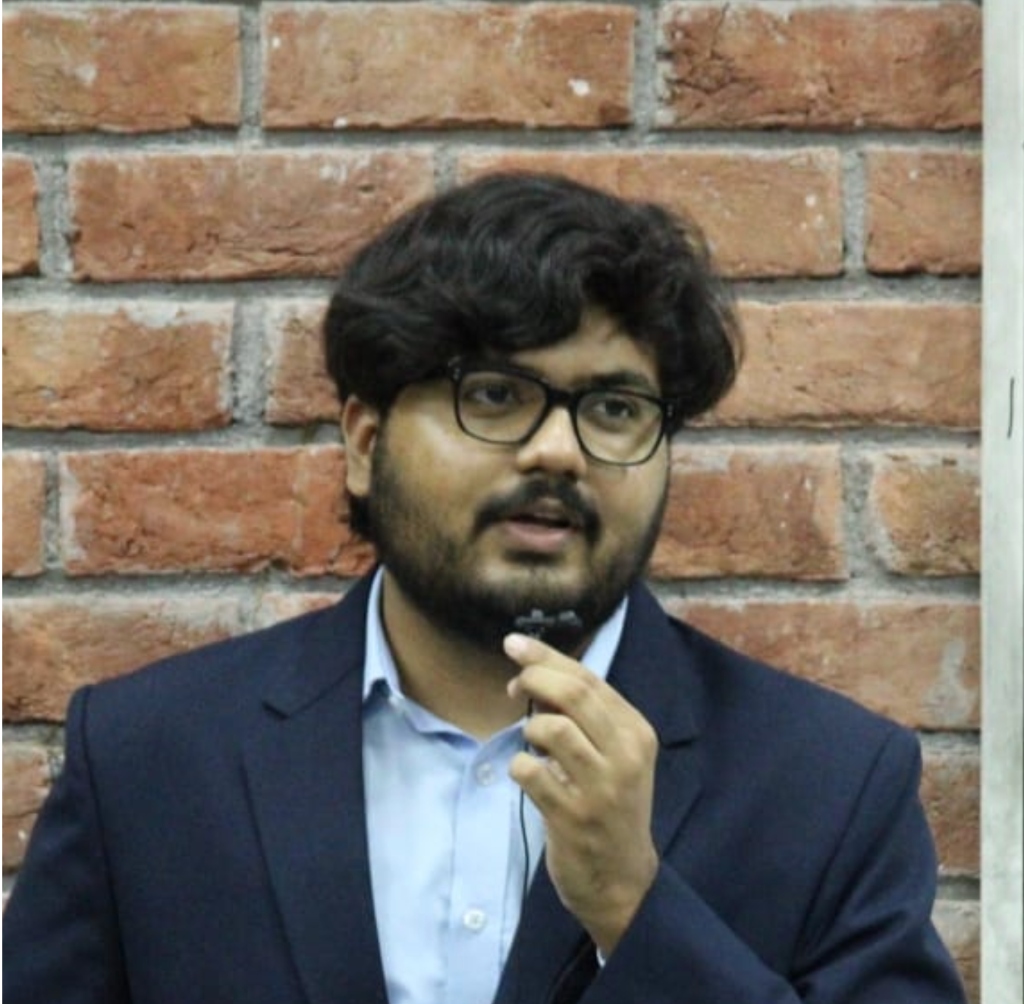
By Achyut Tiwari
There is a line we recite so often that we have stopped hearing it. Satyamev Jayate. Truth alone triumphs. We treat it as a motto, something stamped on currency and courtroom walls. It is not a motto. It is a method, and it is the hardest one we have.
Seeing things as they are is a faculty, and like any faculty it can be lost. It requires three separate acts: looking without flinching, saying out loud what you saw, and holding the difference between good and bad steady enough to act on. Most societies fail at the second. A civilization in decline fails at the first.
I think this is where the honest inquiry into Indian exceptionalism has to begin, and it begins uncomfortably. A civilization whose reach ran from Kandahar to Cambodia is now bounded between half of Punjab and half of Bengal. A thousand years of subjugation is not an accident, and it is not adequately explained by the strength of others. There were weaknesses. They were structural, and they were ours. That deserves serious investigation by military historians and by anyone willing to look, and the finding should be permitted to be unflattering.
My own reading is that somewhere in that long decline we stopped seeing things as they were. Not all at once. Institutions rarely fail loudly. They fail by degrees, as the gap widens between what is said inside them and what is true outside them, until the gap itself becomes the culture and nobody can remember when the reporting stopped being honest.
We have proof that the faculty survives here, and we do not have to look far for it. The Indian Armed Forces work because the structure holds independent of who occupies it. Officers rotate. Standards do not. An after-action report that flatters the command is worthless, and the institution knows it, which is why the reports are written the way they are. That is the property worth studying, and worth exporting to every other part of the Indian state that has learned to report upward what it wishes were true.
Which brings me to why this essay exists. Shiv Kunal Verma has written what follows, on India’s classrooms and on the trust we have quietly spent. He asked for a second voice on the same question, and I take that seriously enough to say where I think his piece begins.
It begins with sight. His opening move is that we mistake the symptom for the disease, and that is a claim about seeing, not about education. A leaked question paper is visible. What it reveals is not, and looking at the second thing requires exactly the faculty I have described. He then goes further than most are willing to, into what a classroom is actually for, and into his own history with a set of borrowed notebooks that saved him effort and cost him the struggle that mathematics is made of.
On the first duty we do not differ at all: say what is true, especially when it is about ourselves, especially when nobody is asking you to.
The rest is his.
Achyut
II. The Classroom Republic
Mistaking the symptom for the disease.
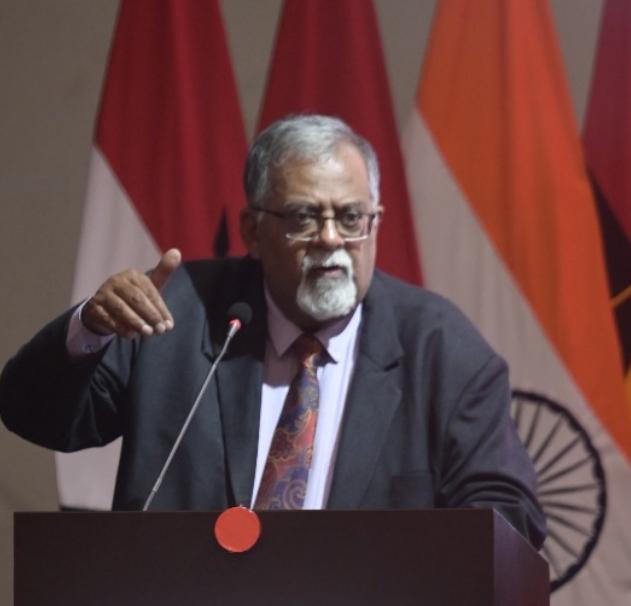
By Shiv Kunal Verma
The demonstrations over the National Eligibility cum Entrance Test at Delhi’s Jantar Mantar are merely the latest manifestation of that deeper malaise. Thousands of young men and women, after years of relentless preparation, found themselves questioning not simply an examination but the credibility of the system that conducted it. Their anger reflects something far more profound than disappointment over an adverse result. It reflects the gradual erosion of trust in institutions created to be custodians of fairness.
Trust is among the slowest qualities to build and the easiest to lose. Once it begins to weaken, every subsequent controversy acquires a life of its own because people cease to believe that institutions are capable of correcting themselves. NEET neither began this crisis nor will it end it. It merely exposed fractures that had long been spreading beneath the surface.
The debate before us, therefore, extends far beyond one examination or one policy. It reaches into the very purpose of education itself. For the question confronting India is no longer simply how we examine our children. It is whether we are still educating them in the fullest sense of that word.
Childhood is where education ought to be at its simplest. Yet it is here that the pressures begin. Parents start searching for schools almost as soon as a child learns to walk. Nursery admissions have evolved into exercises in anxiety. Waiting lists become symbols of prestige, while coaching classes and competitive examinations gradually transform childhood into the opening lap of an educational marathon. The child ceases to be seen as a young mind discovering the world and instead becomes a long term project upon which immense emotional and financial investment is made.
No society should be surprised when commercial incentives begin to reshape institutions once guided principally by educational ideals. Private schools have undoubtedly expanded opportunity and many have achieved remarkable standards of excellence. Yet whenever demand overwhelms supply, education begins to resemble a marketplace where reputation, exclusivity and branding acquire a value of their own. Parents, anxious not to jeopardise their children’s future, often hesitate to question decisions they consider unfair. Scarcity itself becomes a source of influence.
Policies such as the National Education Policy seek to address structural weaknesses, and many of their proposals deserve serious consideration. Yet education has never been transformed by policy alone because it is, above all, a human enterprise. Roads carry us from one place to another. Hospitals heal the sick. Courts dispense justice. Schools perform a far more profound function. They shape the minds that will one day build the roads, staff the hospitals and preside over the courts. Every institution within a Republic is, in some measure, the product of its classrooms.
There was a time when schools measured success in ways that seldom appeared on report cards. A good school was recognised not merely by the scholars it produced, but by the men and women who walked out through its gates. Academic achievement mattered, but it existed within a larger purpose. Education was expected to prepare children for life rather than merely prepare them for examinations.
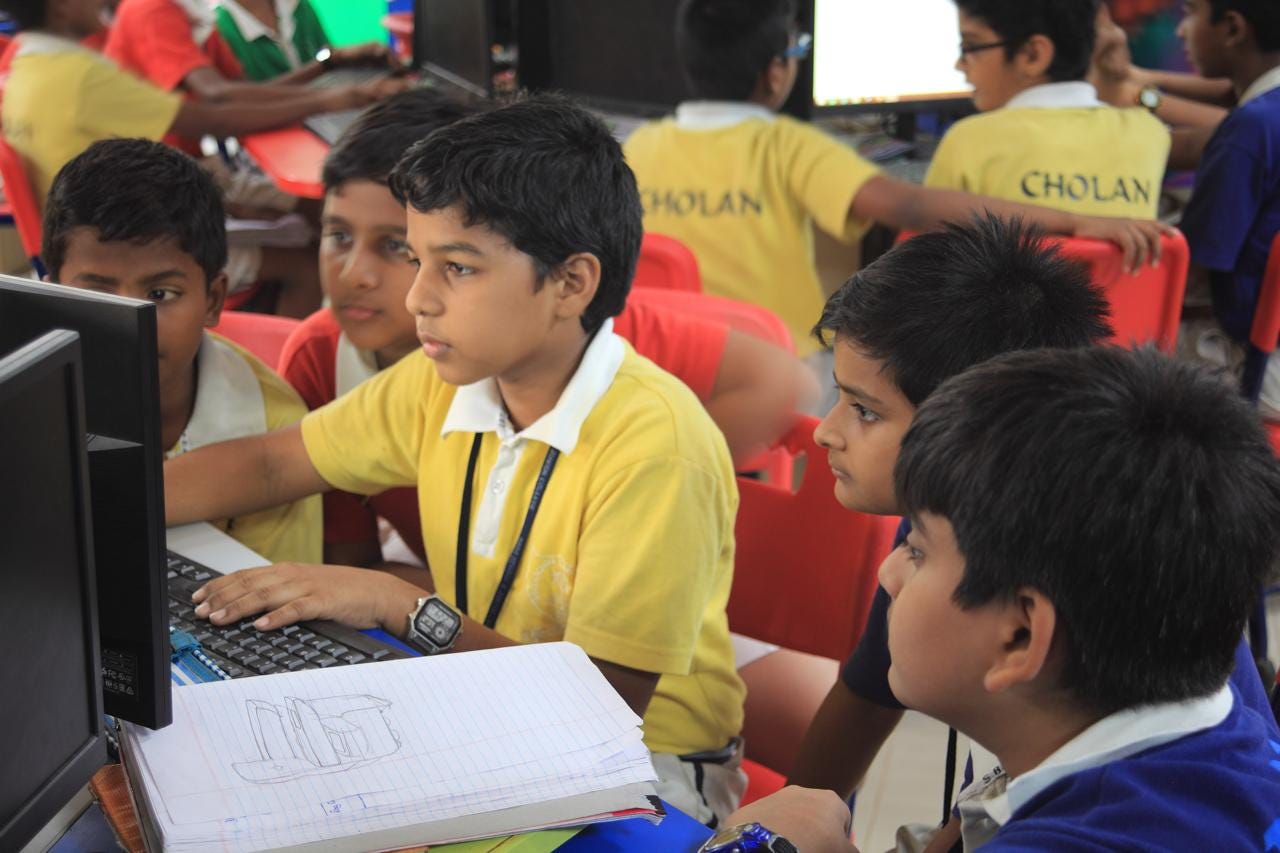
One need only travel across India to appreciate the extraordinary contrasts that exist within the same educational system. There are classrooms where children discuss artificial intelligence and space exploration with astonishing confidence. There are others where students entering middle school continue to struggle with the elementary skills of reading, writing and arithmetic. The tragedy lies not merely in unequal resources but in the quiet acceptance that such disparities have become normal.
The older residential schools occupy a special place within India’s educational imagination. They were founded not merely to impart knowledge but to nurture leadership, independence and public service. Their campuses carry the weight of tradition and their alumni have served the nation with distinction. Yet no institution, however illustrious its past, possesses an automatic claim upon the future. Tradition acquires meaning only when it remains anchored to principle. Once governance drifts away from educational purpose, even the most celebrated institutions risk becoming custodians of reputation rather than custodians of learning. History confers prestige. Only integrity sustains it.
Integrity is often mistaken for the mere absence of corruption. Its meaning is far deeper. An institution possesses integrity when its decisions remain faithful to the purpose for which it was created, even when expediency suggests another course. Trust cannot be legislated into existence. It accumulates slowly through countless decisions in which institutions choose what is right over what is easy.
The teacher remains the living expression of that principle. No technology has yet replaced the influence of a trusted mentor. Across India, countless teachers continue to inspire generations of students through quiet dedication and personal example. Yet where accountability weakens and excellence is treated no differently from indifference, institutions begin rewarding permanence rather than performance. Schools rarely fail because of one negligent teacher. They fail when good teaching and poor teaching become equally acceptable.
There was a time when the school playground occupied a place in education that no classroom could replace. Games were never introduced because every child was expected to become a national champion. They existed because education was understood to be incomplete unless the body developed alongside the mind. Team games taught cooperation long before management schools coined the phrase, while defeat quietly introduced resilience. A missed catch, a lost race or a goal conceded in the closing minutes of a match taught children that disappointment was neither permanent nor fatal. Character was not being taught as a subject. It was being lived, one afternoon at a time.
Sport, however, has not escaped the larger forces that have transformed education itself. Specialised academies, expensive coaching and relentless competition have steadily shifted the emphasis from participation to performance. There is nothing wrong with excellence. Every nation should celebrate its athletes and encourage exceptional talent. Yet the purpose of school sport was never simply to discover the next Olympian. It was to ensure that every child left school healthier, more resilient and better equipped to work with others. A Republic certainly needs champions. It needs far greater numbers of physically fit, emotionally balanced and socially responsible citizens.
If competition transformed the playing field, technology now promises to transform the classroom itself.
Artificial Intelligence has arrived with astonishing speed. Within seconds, a student can summon explanations, solve complex problems and produce polished essays that once demanded hours of work. It is tempting to conclude that education has entered a golden age. Yet there remains a profound difference between possessing information and acquiring understanding. Education has never been about the accumulation of answers. It has always been about the development of judgement.
The distinction is neither philosophical nor abstract. It is deeply personal.
When I entered The Doon School, mathematics was among the subjects I enjoyed most. During my senior years, an older boy passed on his homework notebooks. They contained solutions to almost every assignment our mathematics master, the late Mr O. P. Malhotra, was likely to set. Mr Malhotra was a gifted teacher and a man of reassuring consistency. Before long, I had fallen into the habit of consulting those notebooks before attempting my own work.
Those notebooks gradually became my greatest weakness.
Without realising it, I had exchanged the difficult journey from confusion to understanding for the effortless comfort of someone else’s solution. My homework was completed more quickly, often more accurately, but I was no longer wrestling with the problems themselves. The struggle through which mathematics trains the mind had quietly disappeared.
Looking back almost half a century later, I often think those old notebooks represented my first encounter with what we now call Artificial Intelligence. They saved me effort. They supplied answers before I had earned them. They rewarded efficiency at the expense of understanding.
Artificial Intelligence is immeasurably more powerful than those notebooks ever were. Used wisely, it can become one of the greatest educational tools ever created. It can explain, illuminate and inspire. Yet no technology, however sophisticated, can replace the intellectual discipline of arriving at an answer through one’s own effort. The moment we confuse access to knowledge with the acquisition of judgement, education begins to lose its purpose.
Every generation inherits new technologies. Few inherit the responsibility of deciding how those technologies should shape the minds of children. That is the choice before us today.
Every civilisation reaches moments when it must decide what it wishes to pass on to the next generation. Wealth can be accumulated and squandered. Technologies that appear revolutionary today become obsolete tomorrow. Education alone possesses the unique ability to outlive every political cycle because it shapes the minds that will eventually shape the nation.
This is why the debate before us extends far beyond syllabi, entrance examinations or educational policy. Every child entering a classroom today will one day occupy a position from which decisions affecting countless others will be made. Some will become judges, soldiers, scientists, teachers, administrators or legislators. Every institution that sustains a Republic is replenished, year after year, by children who first learnt to read, to question and to dream within the walls of a school. If those schools fail to cultivate judgement alongside knowledge, society eventually discovers that no profession remains untouched.
Perhaps this is the lesson hidden beneath the protests, the leaked question papers and the endless cycle of educational controversies that dominate our headlines. They are not isolated events. They are warnings that the Republic must pause and ask itself a far more fundamental question. What, after all, is education for?
The demonstrations at Jantar Mantar will eventually disperse. The headlines will move on to the next examination, the next controversy and the next demand for reform. We shall debate each of them with predictable urgency. Yet unless we learn to distinguish the symptom from the disease, we shall continue treating the wounds while ignoring the illness beneath them.
The future of Indian education will not ultimately be decided by Artificial Intelligence, by the National Education Policy or by the next entrance examination. It will be decided by something far older and far more difficult to rebuild: trust. Trust between parents and schools. Between students and teachers. Between citizens and the institutions created to serve them. For when that trust is earned once more, education ceases to be an industry. It once again becomes what every civilisation has always needed it to be: the quiet, patient and enduring act of building a nation, one child at a time.

No comments yet. Be the first.
Loading comments…