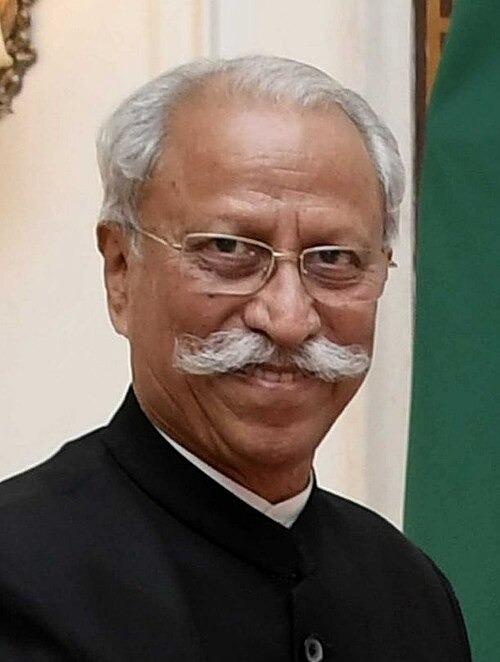

I write this essay as a soldier who has spent four decades on India’s most sensitive frontiers – from the high Himalayas to the jungles of the Northeast – and who now serves as Governor of Arunachal Pradesh. In my experience commanding troops along Jammu & Kashmir and China’s LAC, and later IV Corps in the Northeast, I saw India’s civilizational character reflected in its borders. Indian exceptionalism is the idea that India is more than a mere nation-state – it is a “civilizational continuum,” layered with history, adaptive and enduring. As one commentator observes, “India is an exceptional nation. Its glorious past and profound diversity make it unique.” These words capture the truth I have lived: India’s uniqueness comes from its millennia of continuous civilization, its capacity to absorb change without losing identity, and its democratic spirit that embraces vast diversity.
India’s frontier lands – the mountains of Kashmir and the valleys of Arunachal – have taught me that our nation’s distinctive character shows itself most clearly at the edge of the map. As Governor of Arunachal, I have told audiences that shared cultural platforms bring Indians closer, deepening mutual understanding and reinforcing “that despite diverse cultures and traditions, the nation stands united as one family.” In this essay, I seek to define Indian exceptionalism through the eyes of someone who has defended our borders and lived among frontier communities. I do so in the belief – echoing the project of IndianExceptionalism.org – that India’s remarkable story lies in the choices we have made under constraints, and in the strength drawn from our civilizational roots.
India as a civilizational nation
India’s identity is grounded in a historical continuity that few other countries can claim. From the Indus Valley to the age of empires, from medieval sultanates and rajas to British rule and then democracy, the Indian subcontinent has remained culturally linked even amid upheaval. In practical terms, this means that our institutions and values are rooted in a deep past. We have a tradition of pluralism (‘Dharma’) that long predates modern secularism, and this has helped us integrate diversity into governance rather than fracture it. As the Indian Exceptionalism project puts it, our land is “layered, contradictory, adaptive, enduring” – an idea that requires intellectual humility to appreciate. Indeed, when I served as an officer, I often reflected that the Army itself is an outgrowth of India’s civilizational ethos: its core values of duty, honour, and self-sacrifice are not alien imports but derive from millennia of tradition. I count my blessings that I was taught these virtues, and I know many Indians share pride in a heritage that stretches back thousands of years.
Unlike many nations that were defined abruptly in the modern era, India’s polity evolved gradually. Our democratic republic was born from colonialism, but it took inspiration from long-standing debates on governance and rights (from Ashoka’s edicts to the thoughts of Gandhi and Ambedkar). In practice this has meant that India’s political model is neither copied from the West nor solely indigenous; it is unique. We maintain federal structures that balance regional autonomy with national unity, and we mix ancient cultural ties with modern institutions. As I have said at official events, cultural exchanges – like the celebration of Uttar Pradesh Day in Arunachal – remind us that “such platforms bring people closer and deepen mutual understanding” of our unity in diversity. The image of Arunachali children performing a Bhojpuri folk dance, for example, is a living symbol of how our civilizational identity transcends geography. In short, India’s “exceptional” trait is that it remained a civilization even as it became a modern nation-state: a “civilizational state” whose roots run deep, not an idea invented in 1947.
The strategic meaning of India’s frontiers
For someone like me who has spent years on the borders, I see our frontier regions as the meeting points of India’s exceptional identity and the world. Places like Kashmir and Arunachal are not just lines on a map; they are the outer skin of our civilization where our national will and cultural resilience are most tested. In Jammu & Kashmir, for example, I witnessed how security forces maintained “peace parameters” in the valley, giving space for growth, development and governance even as proxies and insurgents tested our resolve. We never lost sight of development: by dominating the ground, we ensured there was a “window of opportunity” for schools, hospitals and roads to follow the flag. This, to me, is frontier exceptionalism – ensuring that India’s promise of inclusion and progress reaches the Himalayas as surely as it does the Gangetic plain. It means that no gap, be it a mountain pass or an ethnic gap, is allowed to become a fault line.
In the North-East, particularly in Arunachal Pradesh, I have often said that India’s frontiers are both “a strategic buffer and a land of immense human, cultural, and economic potential.” The tribes of Arunachal share heritage with Tibet and Southeast Asia, yet they are fully Indian in aspiration and citizenship. This fusion of frontier peoples with the Indian mainstream – which India’s democracy accomplishes through panchayats, state governments, and intercultural dialogue – reinforces national unity. It is precisely why we invest in road-building and schools in these remote areas. As Governor, I told a seminar that the resilience of Arunachal’s people “coupled with sustained efforts towards inclusive and sustainable development, will firmly establish Arunachal Pradesh as a strategic powerhouse and emerging economic hub.” In other words, the strength of the frontier lies not only in fortifications but in the confidence of its inhabitants – a confidence built by education, infrastructure and trust in the nation.
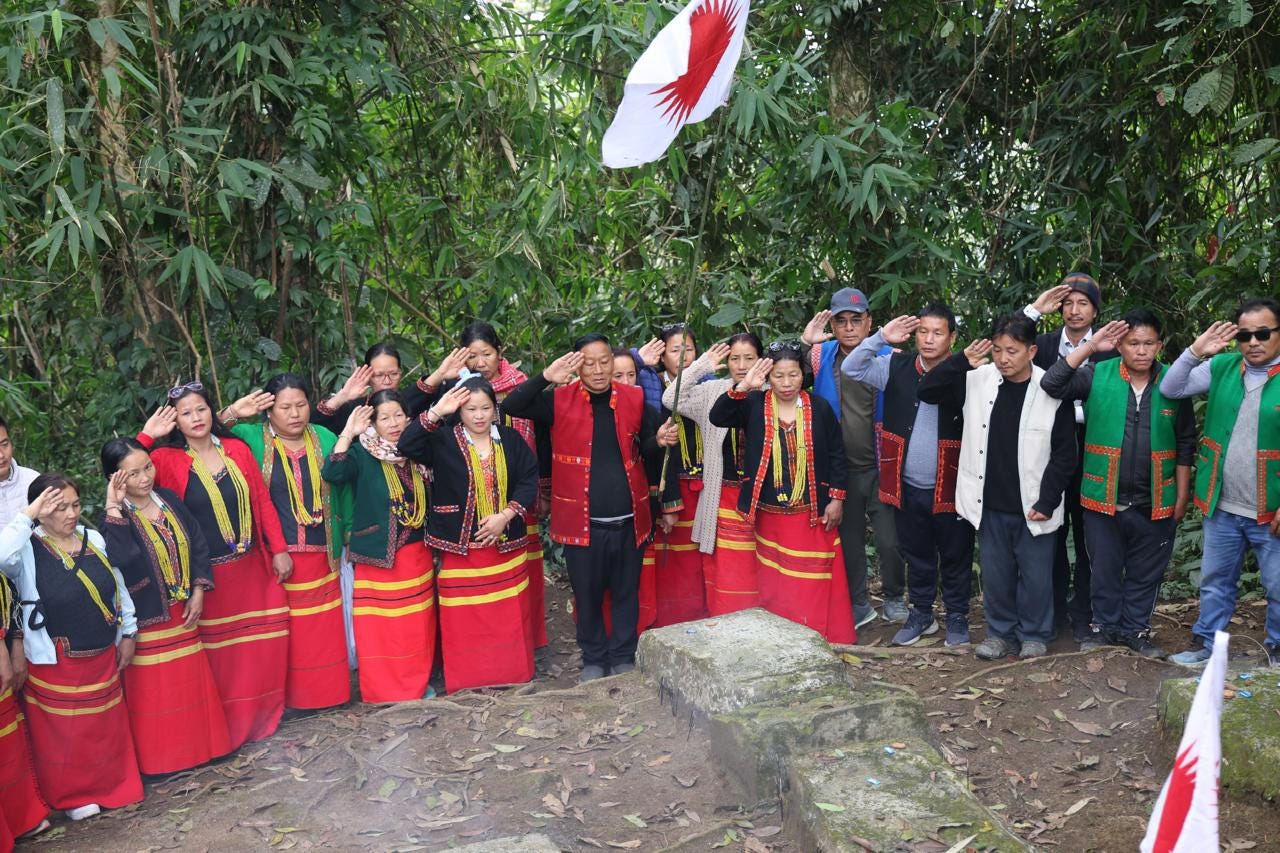 Adi community members from Tuting salute fallen Indian soldiers at Kapang La, site of a 1962 battle in Arunachal Pradesh.
Of course, strategic context makes these frontiers all the more vital. Our borders touch rising powers and restive regions: the Ladakh plateau abuts China’s Tibet, the Tawang Range shelters the southern face of the Himalayas, and to the east our lands meet Myanmar and beyond. We have learned from recent stand-offs that the frontier is as much an idea as a terrain. In 2013, during the Depsang valley face-off with China in Ladakh, I experienced firsthand how China probes each undefended inch of border. It taught me that maintaining frontier resilience requires constant vigilance and readiness. We saw that China has raced ahead in building roads on their side while we had lagged behind. The experience showed that even a few kilometers of missing infrastructure can give adversaries openings. This is why, after retirement, I have continued to stress the need for us to “shed inhibitions and urgently get our infrastructure in place” along the border, so we can hold each Himalayan crest with confidence.
Thus, to me, each inch of frontier territory symbolizes India’s choices: we choose to integrate rather than abandon; to develop rather than neglect; to assert our claims rather than yield them. Our soldiers guarding these outposts are not merely pawns in geopolitics but guardians of a living civilization. The mountains and forests of the borderlands hold memory of India’s past and serve as barracks of its future – making frontier regions themselves a cornerstone of Indian exceptionalism.
The armed forces and the preservation of exceptionalism
The Indian Army and armed forces are, by necessity, central to our exceptionalism. After all, sovereignty and security are prerequisites for any nation to live its chosen values. In my career, I witnessed how robust military capability reinforces our civilizational confidence. Modernization of weapon systems, infrastructure and intelligence has been crucial. As I explained in an interview, the key to countering any aggressive neighbour is to do so “from a position of strength.” That means building world-class surveillance and long-range systems, and even planning an information campaign to deter aggression. This approach is not aggression for its own sake – it is deterrence by dissuasion, a strategy born of realism, not rhetoric. We cannot afford the ideological folly of unpreparedness; rather, we must translate our civilizational endurance into military readiness.
At the heart of this readiness is discipline and national service. The Indian Army forged me with lessons of teamwork and morality that, frankly, I believe every citizen ought to learn. In uniform, I absorbed values of selflessness and integrity – virtues that reflect India’s broader ethos of service. Every soldier knows that his duty is to the nation first; our indomitable chain of command and zero tolerance for indiscipline speak to an internal order rooted in national character. To paraphrase what I have said publicly: when even a few soldiers strayed, we acted swiftly and without fear of favour, because the Army’s honour cannot be compromised. This ironclad discipline is an essential pillar of Indian exceptionalism: it ensures that the defenders of our democracy embody its best principles.
Furthermore, the armed forces play a wider role in preserving India’s exceptional standing. We are not only border-guardians but also guarantors of the peace that allows democracy and diversity to flourish. In counter-insurgency operations, for instance, I found that success depended on winning hearts as much as territory. Our goal was to reduce violence so civilians could live normally – to remove the camouflage of terror so governance and development could return. Only then did villages see the return of roads and schools, and only then did the ethos of unity in diversity take tangible root. In these ways, the Army helps extend Indian rule – not as an alien overlord, but as a protector of the social fabric.
On the strategic front, I have long argued for a comprehensive national approach. When dealing with great power challenges, we must harness diplomacy, economics and alliances alongside military might. In a 2020 interview, I insisted that what India really needs is a “National Security Doctrine that synthesises all instruments of the state to serve our national interests.” This is not ideology; it is simply coherence. We are, after all, a civilizational state that cannot segregate its security from its politics and economics. For example, I have pointed out that in facing China’s rise, we need strategic partnerships – with the United States, Japan, Australia and Southeast Asian democracies – to shape a balance of power in Asia. Far from being foreign mimicry, this is in line with India’s traditional diplomacy: non-alignment in word, selective alignment in practice, based on our values and needs. In sum, the armed forces preserve exceptionalism by upholding our sovereignty and by informing a strategy that befits India’s unique position.
Development and security in border regions
A defining lesson from my service is that security and development go hand in hand, especially on the frontiers. I frequently say that in a border state like Arunachal Pradesh, you cannot have one without the other. Roads, bridges, and power lines are not just conveniences for civilians – they are also the arteries of defense. During my tenure at Northern Command, every kilometer of improved infrastructure in Ladakh or Sikkim directly translated into greater operational flexibility. This truth became clear in dialogue with local communities: ensuring that children can go to school, that farmers can sell crops, and that villagers see the flag and the ballot equally – these acts secure loyalty more effectively than any weapon. This is why I advocate a “whole-of-nation” approach at the frontier, meaning that security agencies, civil administration, and local society must advance together. As I told a seminar in Arunachal: “security, development, diplomacy and community empowerment must progress simultaneously” to meet the challenges of a dynamic frontier.
Investments in the Northeast’s growth – schools, healthcare, tourism – are as much part of our security calculus as patrols and forts. I have seen how, when people feel connected to India’s economy and vision, their faith in the nation’s unity deepens. Conversely, neglect can create vacuums that outside forces exploit. A concrete example is the Free Movement Regime on the India-Myanmar border. It benefited tribal communities, but also presented security risks until we rebalanced tradition with vigilance. We had to adapt policy to keep crossing points open for kinship ties, while securing the periphery against insurgents. This blend of sensitivity and firmness, I believe, is a hallmark of Indian exceptionalism – we learn and adjust based on our historical and social fabric.
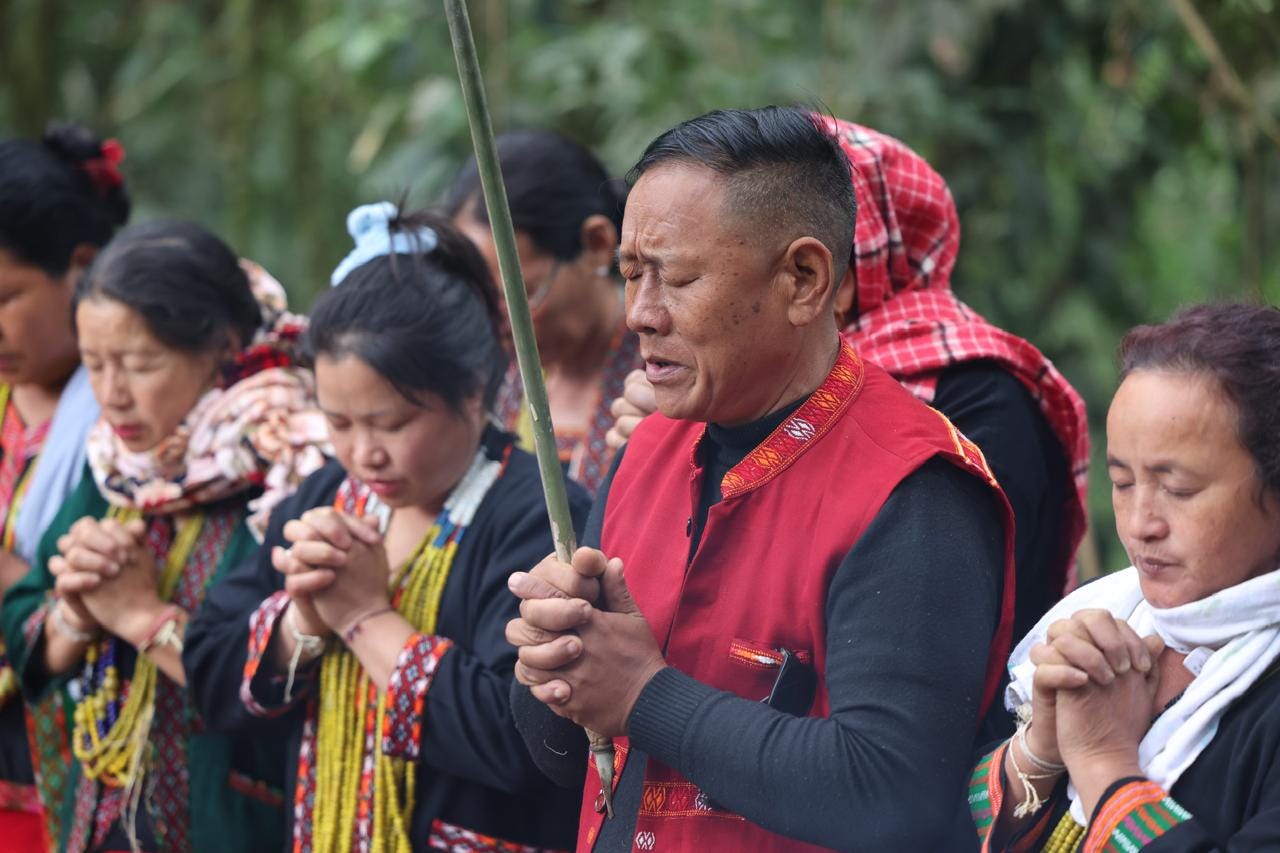 Their names liveth for evermore — Adi community members from Tuting pay tribute to Indian soldiers fallen at Kapang La, 1962.
It is heartening to note that these efforts are showing results. In recent years Arunachal has aligned its growth with national initiatives like Vision 2047, and this integration is strategic. Its very location becomes an asset: by connecting Arunachal to Assam’s highways and to rail networks, we are simultaneously strengthening our northeastern flank and implementing India’s Act East policy. I have pointed out publicly how Arunachal’s role in “advancing India’s Act East policy by fostering connectivity and trade with Southeast Asia” reinforces our geopolitical relevance. In this way, border development fuels both prosperity and deterrence. As I summed up at another forum, strengthening security builds confidence in the state, while inclusive development brings “opportunity, dignity, and resilience” to the people – and together these forces make a frontier province a “strong, secure, and vibrant pillar” of the nation.
In practical terms, we have accelerated efforts to close the infrastructure gap. I frequently remind my interlocutors in New Delhi that while our neighbors have built slick roads up to the Himalayas, on our side we were only in the recent years “making an attempt to get our infrastructure in place.” Fortunately, this has become a priority: new border roads, tunnels and airstrips are under construction across Arunachal and Ladakh. When I visit a remote village in winter, I ask the young soldiers if they have enough supplies and warmth – and seeing a robust road there gives me confidence. These tangible improvements, along with better schools and internet access, signal to every border family that India is not an abstraction but a provider. In short, in every boundary district, our creed is that Indian exceptionalism means leaving no citizen behind, especially at the periphery.
Exceptionalism in the 21st century
As I reflect on India’s place in the 21st century, I see our exceptionalism as both a guiding star and a burden of responsibility. A century-old continent is shifting around us – China’s assertiveness, evolving Pakistan, new Asian alignments – and India must navigate with both firmness and wisdom. But I am convinced that our strengths as a “civilizational continuum” will hold us steady. We do not seek empire, but we cannot ignore our responsibilities in a turbulent region. In fact, India today aspires to be what strategists call a “stabilising power” in Asia. By that, I understand that we aim to ensure peace through strength and principled engagement, not domination. We do this through strategic partnerships and by upholding freedom of navigation and democratic values – an approach I have described as aligning with likeminded partners to “dominate the Indo-Pacific region and thwart inimical designs.”
Our democratic and cultural model is not so much a foreign policy plank as it is a national temperament. Indian exceptionalism means we believe in debate, diversity, and inclusion as the bedrock of stability. We have shown resilience by surviving insurgencies and integrating former rebels, by holding elections in mountains where the world wondered if it could be done. As one observer noted, exceptionalism “is not a claim of superiority. It is an attempt to identify moments where India behaved unlike other nations… where the choices made were neither obvious nor inevitable.” Indeed, India’s history is filled with such moments: choosing democracy after colonialism when alternatives prevailed elsewhere, maintaining a secular republic in a multi-religious society, and balancing great-power relations without losing autonomy.
In the end, to defend Indian exceptionalism is to defend India’s project itself. We must preserve our territorial integrity on the frontiers through a prepared and disciplined military – but also preserve our soul through unity, justice and development. I have no doubt that if we continue to combine the soldier’s realism about threat with the statesman’s sense of service, India’s compass will stay true. Our exceptionalism, as I see it, is not arrogance but awareness: an awareness that because we carry the legacy of one of humanity’s oldest civilizations, our choices carry weight for generations. In the 21st century and beyond, that great responsibility will continue to guide how India stands apart – and stands up – among the nations.
No comments yet. Be the first.
Loading comments…